• UGM
  • IT Center
  • English
    • English
    • Bahasa Indonesia
Universitas Gadjah Mada Master Program of Linguistics
Faculty of Cultural Sciences
Universitas Gadjah Mada
  • Home
  • About
    • HISTORY
    • VISION&MISSION
    • Organizational Structure
  • ADMISSION
  • Curriculum
  • ALUMNI PROFILE
  • LECTURERS
  • Home
  • Agenda EN
Arsip:

Agenda EN

CALL FOR PAPERS AND PARTICIPATION INTERNATIONAL CONFERENCE ON LINGUISTIC STUDIES

Agenda ENNews Release Thursday, 16 April 2026

The Master’s Program in Linguistics and the Department of Language and Literature, Faculty of Cultural Sciences, Universitas Gadjah Mada, cordially invite academics, researchers, and practitioners in the field of language studies to submit abstracts and participate in the International Conference on Linguistic Studies entitled “Form, Meaning, and Function of Language in the Era of Digital Transformation.”

This conference aims to provide an international forum for the dissemination and discussion of current research addressing the evolving roles of language in contemporary society, particularly in the context of rapid digital transformation.

Valedictory Address
Prof. Dr. I Dewa Putu Wijana

Keynote Speakers

  • Zara Maxwell-Smith — University of New South Wales, Australia
  • Jérôme Samuel — Institut National des Langues Orientales (INALCO), France
  • Nguyen Tanh Tuan — Vietnam National University, Vietnam
  • Xu Yun Yu — Tianjin Foreign Studies University, China
  • Suhandano — Universitas Gadjah Mada, Indonesia

Date
Thursday–Friday, 10–11 September 2026

Venue
Faculty of Cultural Sciences, Universitas Gadjah Mada

Registration and Abstract Submission
ugm.id/regisling

Important Dates

  • Abstract Submission Deadline: 30 May 2026
  • Full Paper Submission Deadline: 31 July 2026
  • Participant Registration Deadline: 30 August 2026

Contact Information

WhatsApp: wa.me/+6281125113370
Email: bahasadansastra.fib@ugm.ac.id

Conference Overview

Linguistic inquiry has historically been characterized by analyses of form, meaning, and function within predominantly formalist frameworks. In recent decades, however, the field has increasingly embraced functionalist perspectives, wherein language is examined not only as a system to be described but also as a dynamic resource for communication and for representing social, political, and cultural realities.

Contemporary linguistic studies have expanded across disciplinary boundaries, engaging with fields such as communication studies, semiotics, anthropology, law, and medicine. This shift reflects a broader movement from an emphasis on langue toward parole—or “language in use”—highlighting language as it operates in real-world contexts.

Moreover, the rapid advancement of communication technologies in the era of digital transformation has further extended the functions of language, particularly within digital and social media environments. In response to these developments, the Faculty of Cultural Sciences, Universitas Gadjah Mada, convenes this international conference as a platform for scholarly exchange and critical engagement.

This conference is also organized in honor of the retirement of Prof. Dr. I Dewa Putu Wijana, S.U., M.A., whose distinguished body of work—spanning books and scholarly articles published in national and international journals—has significantly contributed to the advancement of linguistic studies. The conference theme reflects and celebrates his academic legacy.

INTERNATIONAL CONFERENCE ON LINGUISTIC STUDIES

Agenda ENNews Release Thursday, 16 April 2026

The Master’s Program in Linguistics and the Department of Language and Literature, Faculty of Cultural Sciences, Universitas Gadjah Mada, cordially invite academics, researchers, and practitioners in the field of language studies to submit abstracts and participate in the International Conference on Linguistic Studies entitled “Form, Meaning, and Function of Language in the Era of Digital Transformation.”

This conference aims to provide an international forum for the dissemination and discussion of current research addressing the evolving roles of language in contemporary society, particularly in the context of rapid digital transformation.

Valedictory Address
Prof. Dr. I Dewa Putu Wijana

Keynote Speakers

  • Zara Maxwell-Smith — University of New South Wales, Australia
  • Jérôme Samuel — Institut National des Langues Orientales (INALCO), France
  • Nguyen Tanh Tuan — Vietnam National University, Vietnam
  • Xu Yun Yu — Tianjin Foreign Studies University, China
  • Suhandano — Universitas Gadjah Mada, Indonesia

Date
Thursday–Friday, 10–11 September 2026

Venue
Faculty of Cultural Sciences, Universitas Gadjah Mada

Registration and Abstract Submission
ugm.id/regisling

Important Dates

  • Abstract Submission Deadline: 30 May 2026
  • Full Paper Submission Deadline: 31 July 2026
  • Participant Registration Deadline: 30 August 2026

Contact Information

WhatsApp: wa.me/+6281125113370
Email: bahasadansastra.fib@ugm.ac.id

Conference Overview

Linguistic inquiry has historically been characterized by analyses of form, meaning, and function within predominantly formalist frameworks. In recent decades, however, the field has increasingly embraced functionalist perspectives, wherein language is examined not only as a system to be described but also as a dynamic resource for communication and for representing social, political, and cultural realities.

Contemporary linguistic studies have expanded across disciplinary boundaries, engaging with fields such as communication studies, semiotics, anthropology, law, and medicine. This shift reflects a broader movement from an emphasis on langue toward parole—or “language in use”—highlighting language as it operates in real-world contexts.

Moreover, the rapid advancement of communication technologies in the era of digital transformation has further extended the functions of language, particularly within digital and social media environments. In response to these developments, the Faculty of Cultural Sciences, Universitas Gadjah Mada, convenes this international conference as a platform for scholarly exchange and critical engagement.

This conference is also organized in honor of the retirement of Prof. Dr. I Dewa Putu Wijana, S.U., M.A., whose distinguished body of work—spanning books and scholarly articles published in national and international journals—has significantly contributed to the advancement of linguistic studies. The conference theme reflects and celebrates his academic legacy.

Kalingga UGM Presents Reading Corner and Literacy Program in RPKJ Satunama

Agenda ENNews Release Tuesday, 31 March 2026

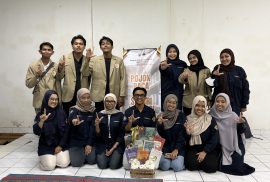
On Saturday, March 7, 2026, the Linguistics students and members Keluarga Mahasiswa Linguistik Universitas Gadjah Mada (Kalingga), held an activity titled “Pembuatan Pojok Baca Binaan Kalingga dan Safari Literasi”  or the Establishment of the Kalingga-Assisted Reading Corner and Literacy Safari at the Satunama Mental Health Learning House (RPKJ Satunama). This activity is part of the work program of Kalingga’s Social and Community Action Division (Aksosma), which focuses on strengthening literacy while empowering communities through a humanistic and inclusive approach.

This program was organized as an effort to create an inclusive space that is supplementary to the psychosocial recovery process of the assisted residents (WD) of RPKJ Satunama. In this activity, Kalingga students collaborated with the management of RPKJ Satunama to organize a reading corner that can be used as a learning space, a reflection space, and a space for interaction among the assisted residents.

The presence of Kalingga students was warmly welcomed by both the staff and the assisted residents of RPKJ Satunama. Enthusiasm was evident from the beginning of the activity, as students and residents worked together to arrange bookshelves, categorize reading materials, and prepare the reading corner to make it comfortable for use.

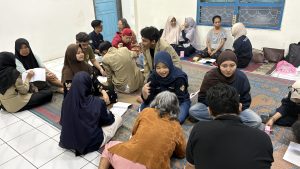
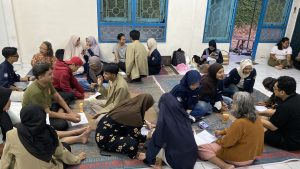
In addition to setting up the reading corner, the series of activities also included Safari Literasi. In this activity, Kalingga members invited residents to participate in various interactive activities such as educational games, simple writing exercises, storytelling sessions, and light discussions. These activities were designed to provide an enjoyable literacy experience while fostering a sense of togetherness.

Through this approach, literacy is not only understood as reading and writing activities, but also as a means to rebuild self-confidence, create a space for expression, and strengthen social relationships between the assisted residents and their surrounding environment.

The Head of Kalingga UGM, Moh. Nawalul Fawaid El Haqi, stated that this activity is part of the students’ commitment to delivering social programs that have a real impact on society. According to him, community service activities like this are important for fostering a sense of care and empathy among students, while also serving as an implementation of humanitarian values in social life.

“We hope that the program designed by the Aksosma Division can become a concrete and sustainable initiative. We also hope that this activity can inspire compassion among people and strengthen the value of togetherness within society,” he said.

Meanwhile, the Head of Kalingga’s Aksosma Division, Abu A.K., explained that literacy can be an effective approach in supporting the psychosocial recovery process of assisted residents. He stated that literacy plays an important role in helping individuals understand their life experiences, express their feelings, and build new hope. “Literacy is not just about reading and writing, but also about creating a space for hope. Through this activity, we aim to provide a space that allows assisted residents to express themselves, share stories, and rebuild their spirit,” he said. Abu also hopes that the reading corner that has been established can continue to be utilized by the assisted residents in their daily activities at RPKJ Satunama.

The 2026 Student Gathering of Magister Linguistik and Kalingga Inauguration

Agenda ENNews Release Thursday, 12 February 2026

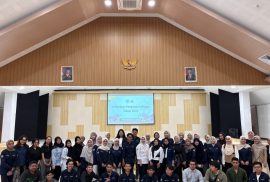
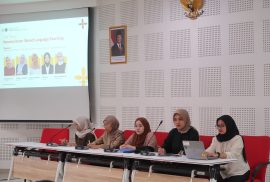
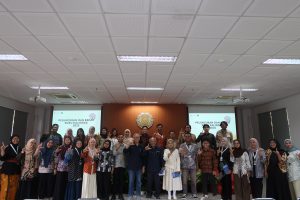
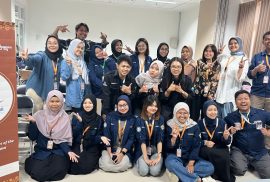
Magister Linguistik welcomes the new semester with a Student Gathering in Auditorium Gedung Poerbatjaraka on February 9th, 2026. This event plays a pivotal role in tightening the relationship between students and lecturers. The activity consisted of a presentation from the study program, which provided important information about academic regulations, research opportunities, and plans. In addition, the forum served as a space to gather various questions from active students of the Master’s Program in Linguistics. The new Head of Study Program, Dr. Hayatul Cholsy, S.S., M.Hum, and the Secretary of Study Program, Dr. Wira Kurniawati, MA. lead the lively discussion between the program and the students. This interactive session allowed students to express their concerns, share suggestions, and gain a clearer understanding of the program.

The event was attended by lecturers as well as students from the 2024 and 2025 cohorts. Their presence created a warm and engaging atmosphere, encouraging open discussion between students and faculty members. Rizky Alida, a student staff member, explains that, “although the gathering was conducted simply, I believe this forum is highly necessary for the future development of the study program. It strengthens communication and builds a sense of community among academic members.”

The newly elected head of Kalingga 2026, Moh. Nawalul Fawaid El Haqi, also expresses his aspirations for the student organization. “I hope Kalingga 2026 can become a real space for movement and collaboration, especially for students, to contribute actively to the advancement of the Master’s Program in Linguistics UGM.”

Neuroscience-Based Language Teaching: Bridging Brain, Emotion, and Classroom Practice

Agenda ENNews Release Thursday, 12 February 2026

On December 16th, 2025, a talk show on Neuroscience-Based Language Teaching was held at Room 709, Soegondo Building, Faculty of Cultural Sciences (FIB), Universitas Gadjah Mada. The event brought together Language Teaching students in Magister Linguistik, who share a common concern: how understanding the brain can improve language learning.

The first theme, Teaching Language through Gamification: A Neuroscience-Based Approach, emphasized the importance of creating a safe and engaging learning environment. Speakers highlighted the role of the amygdala, the part of the brain responsible for fear and stress responses. When students feel threatened or anxious, the amygdala becomes active, which can disrupt the hippocampus, or the brain’s center for memory formation.

This explains why students who appear passive or disengaged may actually be experiencing emotional barriers to learning. Through interpersonal communication and close observation, teachers can identify students’ preferred learning styles. One case shared by Fajriani Fitri illustrated how a stressed student with poor academic performance regained confidence after a visual-based learning approach was applied. As she noted, teaching language also means addressing students’ past failures and helping them believe in their own ability.

The second theme, Teaching with Emotion: How Affective Neuroscience Enhances Language Learning, focused on the emotional dimension of language education. Negative emotions, such as anxiety or trauma from previous learning experiences, can strongly affect students’ willingness to speak, especially in foreign languages. Therefore, teachers are encouraged to build interactive and emotionally supportive classrooms. By emphasizing action-based learning—such as practicing how to order food in English—students can focus on communication rather than fear of mistakes. Fluency is prioritized before accuracy to reduce anxiety and foster positive memories.

The discussion concluded by addressing adult learners, such as those preparing for TOEFL or IELTS. While adults have different emotional conditions and learning goals, emotional and interpersonal approaches remain relevant. Repeated practice, deductive teaching methods, and emotional awareness are key to engaging the limbic system and sustaining learning motivation. Ultimately, while methods may change, one constant remains: effective language teaching must reach both the mind and the heart of learners.


BULINGGA: A Space for Linguistic Voices and Public Engagement

Agenda ENNews Release Monday, 12 January 2026

Buletin Linguistik Gadjah Mada (BULINGGA) was born from a personal concern about the lack of accessible platforms dedicated to linguistic issues. BULINGGA’s editor-in-chief, Idatus Sholihah, stated that language is inseparable from social life, yet discussions on language often remain confined to newspapers or major online media, where strict curation limits who can publish. Responding to this gap, BULINGGA was initiated as an alternative publication space that provides information and fresh insights into linguistic developments while remaining open to diverse voices.

Designed in an engaging and reader-friendly format, BULINGGA features short articles, scholarly opinions, and highlights of linguistic research at both national and international levels. Each edition focuses on a specific theme. The first edition, Bahasa dan Budaya (Language and Culture), presented eight articles from eight contributors. It was followed by Bahasa dan Politik (Language and Politics) with six articles from seven contributors, Indigenous Language and Identity (Bahasa Daerah dan Identitas) with a significant increase to twelve articles from twelve contributors, and Bahasa dan Gender (Language and Gender), which featured eight articles by eight contributors. This progression reflects growing interest and participation in the bulletin.

Published regularly, BULINGGA serves as a space for sharing ideas, research findings, and relevant linguistic issues. Students, lecturers, linguists, language enthusiasts, and the general public are all welcome to contribute. The editorial process, from curation to publication, is dynamic and stimulating, as contributors explore the same issue from unique perspectives. While editorial challenges arise, particularly when submissions lack a clear linguistic focus, contributors remain enthusiastic and committed to future editions.

As a newly initiated platform, BULINGGA thrives on collective effort. With support from Kalingga colleagues handling layout, editing, and online distribution, the bulletin aims to foster a strong culture of literacy, broaden public access to linguistic knowledge, and ensure that linguistic discourse is not exclusive to academia.

Read all BULINGGA editions here:

bit.ly/BulinggaEdisiPertama

bit.ly/BulinggaEdisiKedua

bit.ly/BulinggaEdisiKetiga

bit.ly/BulinggaEdisiKeempat

Kalingga 2025 Book Review: How Emerging Linguists Are Keeping Up with AI

Agenda ENNews Release Friday, 19 December 2025

On Wednesday, December 10th, 2025, Keluarga Mahasiswa Linguistik Universitas Gadjah Mada (Kalingga) successfully hosted its final project at the end of 2025, a lively book review titled “Language in the Shadow of Technology.” Reviewed by Cicik Tri Jayanti, S.Pd., M.A., and Amon Bernabas Tenis, S.Pd., the book presents the writings of linguistic students and lecturers on contemporary language issues. The book encompasses major topics on the involvement of technology, such as social media or Artificial Intelligence (AI), within the use of language in the modern day, the use of indigenous language,  and translation settings.


Located on the second floor of the Universitas Gadjah Mada Library, the discussion opens with a personal reflection on children’s cartoon narratives by Cicik Tri Jayanti, S.Pd., M.A., which spontaneously invites a burst of laughter from the audience. She further states that “a story” of a personal experience is a marker that differentiates human work and AI work.


Through her experience and observation, Cicik Tri Jayanti, S.Pd., M.A. found that there is an apparent and noticeable pattern in a large language model (LLM) that constantly needs evaluation. From the use of limited contradictory conjunctions to the unfocused organization of ideas, she highlights the imperfection and lack of authenticity of LLM. Therefore, she invites students to proactively employ AI as a research assistant rather than the main vehicle to conduct research: “Instead of using AI extensively, we should be better at managing our time.”


Comprising valuable exploration in empirical language, Cicik Tri Jayanti, S.Pd., M.A., describes reading the book as a tour to authentic data. She further suggests some improvements in the author guidelines to harmonize the topical ideas. As the head of this book review project, Amon Bernabas Tenis, S.Pd., also shares an interesting story of the book’s behind-the-scenes from August 2025, from the preparation to book socialization. He is grateful that the book received a warm response from the campus community. “Words rooted in sincerity will always connect and resonate with the reader’s own experiences,” he concluded.

Decluttering Initiative by Kalingga: A Collective Effort to Support the Community

Agenda ENNews Release Tuesday, 16 December 2025

As a part of the social action program, Keluarga Mahasiswa Linguistik Universitas Gadjah Mada successfully organized a decluttering initiative aimed at collecting and distributing gently used clothing to communities in need. The activity involved a series of well-planned stages, beginning with designing the event concept, creating posters and a timeline, and sharing the information widely. Students and the general public were invited to donate their unused but wearable clothes. Each donor also received a thank-you letter as a token of appreciation for their contribution.

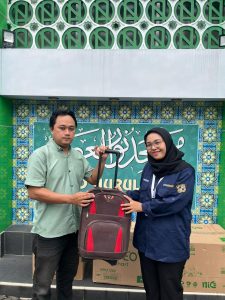
All members of the Aksosmas division were actively present throughout the key stages of the initiative, including donation collection, sorting, and distribution. The donated clothes underwent a careful sorting process to ensure that only high-quality items were delivered to beneficiaries. The final distribution was held on Friday, 14 November 2025, at Masjid Nurul Asri, where representatives from the mosque attended and received the donations directly.

Despite the relatively short preparation period, the program ran smoothly and efficiently. The collaborative effort of the organizers and the positive response from donors contributed greatly to the initiative’s success. “We hope that this action not only benefits those in need, but also encourages individual sustainability,” stated Asma Haniza, the coordinator of Aksosmas Division.

This decluttering activity proved highly valuable, serving as a platform for both the campus community and the general public to give new purpose to unused clothing. Beyond supporting those in need, the initiative also encouraged individuals to declutter their personal spaces, highlighting how simple acts of organization can create meaningful social impact. Through this program, Kalingga demonstrated its commitment to fostering empathy, sustainability, and shared responsibility within the community.

Check the decluttering project here https://www.instagram.com/reel/DREN1pNgQIV/?utm_source=ig_web_copy_link&igsh=MzRlODBiNWFlZA==

Linguistics Program Undergoes Internal Quality Audit (AMI) to Reinforce Commitment to Excellence

Agenda ENNews Release Wednesday, 3 December 2025

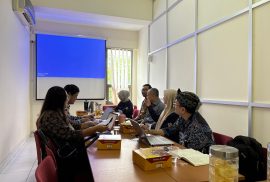
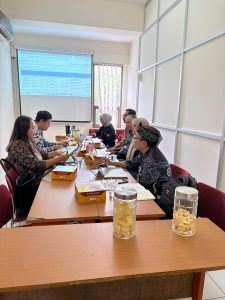
Yogyakarta, September 25, 2025 – The Master’s Program of Linguistics, Faculty of Cultural Sciences, Universitas Gadjah Mada successfully hosted its annual Internal Quality Audit (AMI/Audit Mutu Internal) visit. The rigorous assessment, a crucial component of the university’s quality assurance cycle, took place in Room 305 of the Margono Building, providing valuable feedback to solidify the program’s academic and administrative standards.

The audit session involved detailed discussions spanning the administrative performance of the program over the past year. Auditors focused on various operational aspects, ensuring that documentation, curriculum implementation, and service standards meet UGM’s commitment to excellence. The Linguistics team present for the visit included esteemed faculty members: Prof. Dr. Suhandano, M.A., Prof. Dr. Sajarwa, M.Hum., Dr. Merry Andriani, S.S., M.L.C.S., Dr. Sailal Arimi, M.Hum., Dr. I Putu Permana Mahardika, S.S., M.Hum., along with administrative staff Rizky Alida, S.S., Elisabeth Kivana Damayanti, S.S., and Tita Febryta, S.S.

The program was assessed by a professional team comprising Sri Wahyuningsih, S.S., M.A. and Alif Subardono, S.T., M.Eng. A key focus of the discussion was the outstanding performance of both students and lecturers. The program highlighted notable achievements, including student successes in national and international conferences, and the continuous output of high-quality research from faculty members. These achievements reinforce the program’s stature as a leading center for linguistic studies in Indonesia.

The AMI visit concluded successfully, offering strategic recommendations for administrative enhancements and operational refinements. The Linguistics Program faculty and staff affirmed their unwavering commitment to continual improvement. The insights gained from the audit will be immediately utilized to refine administrative efficiency, foster greater student and faculty achievements, and ensure the program remains at the forefront of linguistic research and education. This dedication ensures that the program is not only compliant with national standards but is consistently striving to be better.

Sarkarapraja Workshop Highlights Collaborative Effort to Document Java’s Sugar Industry History

Agenda ENNews Release Wednesday, 3 December 2025

The Lokakarya Sarkarapraja (Sarkarapraja Workshop), held on 19 October 2025 at Rooms 625–627 of the Soegondo Building, Faculty of Cultural Sciences, Universitas Gadjah Mada, brought together Kalingga UGM (Keluarga Mahasiswa Linguistik Universitas Gadjah Mada) and the Wikimedia Community in Yogyakarta in a collaborative initiative to strengthen historical documentation efforts in Indonesia. Focused on editing and producing articles about the history of the sugar industry in Java, the workshop served as a platform for students to learn, create, and contribute to open-access knowledge.

The event was designed to introduce participants to editing tools on Indonesian Wikipedia, a key platform under the Wikimedia Foundation that supports public knowledge-sharing. Students were guided step by step through the process of writing a full article from scratch. Each participant received a specific historical topic, such as Pabrik Gula Kedungbanteng or Makam Jonkheer Hermanus Folkert Van Ingen along with relevant photo materials. These topics were selected for their significance in the development of Java’s early sugar industry, an industry that shaped the island’s economy, labor systems, and sociocultural landscapes for centuries.

Beyond improving writing and digital literacy skills, the workshop emphasized the importance of preserving local history. By producing well-researched Wikipedia entries, students helped safeguard narratives and discourse that are often overlooked in mainstream historical accounts. Their contributions enrich the collective memory of Java’s industrial past and ensure that future generations can access reliable information about the region’s sugar heritage.

Through this collaboration, participants not only enhanced historical documentation but also became active cultural custodians within the Indonesian Wikipedia community.

123…6
Universitas Gadjah Mada

Master Program of Linguistics

Faculty of Cultural Sciences
Universitas Gadjah Mada
Jl. Nusantara 1, Bulaksumur Yogyakarta 55281, Indonesia
fib@ugm.ac.id
+62 (274) 513096
+62 (274) 550451

© 2023 Faculty of Cultural Sciences Universitas Gadjah Mada

KEBIJAKAN PRIVASI/PRIVACY POLICY